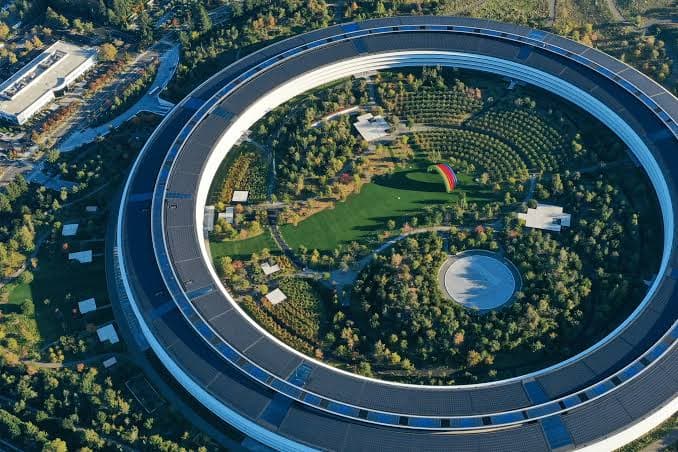

Apple has sued OpenAI, its hardware chief and a former Apple engineer in federal court, accusing the ChatGPT maker of running a coordinated campaign to obtain confidential Apple technology as it builds its first consumer hardware device.
The lawsuit, filed Friday, July 10, in the U.S. District Court for the Northern District of California, names OpenAI Foundation, OpenAI Group PBC and io Products, the hardware venture OpenAI acquired last year, along with two individual defendants: Tang Yew Tan, OpenAI's chief hardware officer and a 24-year Apple veteran who led product design for the iPhone and Apple Watch, and Chang Liu, a former senior systems electrical engineer at Apple.
According to the complaint, Apple alleges the misconduct occurred “at every level, from members of its Technical Staff to its Chief Hardware Officer, and in coordination with business partners.” The filing accuses OpenAI of systematically acquiring Apple's confidential information through recruiting practices, former employees and supplier relationships to accelerate development of its own hardware products.
Apple says more than 400 former Apple employees currently work at OpenAI. The company is not arguing that hiring alone is improper, but alleges specific conduct went further. The complaint claims Tan directed job candidates who were still employed by Apple to bring “actual parts,” including batteries, logic boards and other components, to interviews for “show and tell” sessions intended to draw out additional confidential information. Apple also alleges Tan used internal Apple project code names during OpenAI's recruiting process and circulated an internal Apple offboarding document to help new hires evade the company's exit security checks.
Separately, the lawsuit alleges Liu retained an Apple-issued laptop after leaving the company in 2026 and used it to access Apple's internal cloud storage, downloading confidential technical documents, engineering presentations and information about unannounced products. The complaint additionally alleges OpenAI approached one of Apple's manufacturing partners and obtained details of a proprietary metal-finishing technique after leaving the partner with the impression that Apple had authorized the disclosure.
Apple says it first raised concerns with OpenAI in February and received no response before filing suit. The company is seeking a preliminary injunction requiring the defendants to preserve evidence, stop using any Apple trade secrets and return confidential materials, along with unspecified damages. OpenAI has denied wrongdoing. “We have no interest in other companies' trade secrets. We remain focused on building innovative technology that empowers people everywhere,” a company spokesperson said in a statement provided to multiple news outlets, including CNBC and Axios. The dispute marks a sharp reversal in a relationship that began in 2024, when Apple and OpenAI announced a partnership integrating ChatGPT into Siri and other parts of Apple's operating systems, an arrangement that remains active and lets iPhone users access ChatGPT through Apple Intelligence. Apple has not said whether the lawsuit will affect that commercial partnership.
Tensions between the companies had been building for months. OpenAI acquired io Products, the hardware startup co-founded by former Apple design chief Jony Ive, in a deal reported at roughly $6.5 billion. Ive, who leads OpenAI's device work, is not named as a defendant. OpenAI has not disclosed details of its first hardware device, though CEO Sam Altman said in November that the company had completed initial prototypes.
The filing landed as OpenAI pursues a confidential IPO process that people familiar with the matter say could target a valuation above $1 trillion, adding legal uncertainty to a high-stakes fundraising period. It also arrived two months after OpenAI prevailed in a separate, high-profile case brought by Elon Musk, OpenAI's co-founder, in which a federal jury found Musk had waited too long to sue over claims that Altman and the company abandoned its nonprofit mission. Musk has said he plans to appeal. That earlier case fed directly into the weekend fallout from Apple's new lawsuit. Musk, who left OpenAI's board in 2018 and has since built the rival xAI lab under SpaceX, seized on the Apple filing to renew his public criticism of Altman, posting on social platform X that “Scam Altman strikes again” and following with additional pointed remarks. Altman responded on X, needling Musk over SpaceX's space-based data center plans and noting that recent benchmark results suggest OpenAI's newest model release is drawing outsized attention from his rival. Altman also said he had “tremendous respect” for Apple and was “not afraid” of the lawsuit.
Legal analysts caution the case is at an early stage. Trade secret claims in the technology sector are common, and Apple will need to prove OpenAI obtained and used legally protected information, a higher bar than simply showing it hired large numbers of former Apple employees. The litigation could still influence how technology companies structure hiring practices, employee offboarding and confidentiality protections as competition intensifies over emerging categories of AI hardware.